

Calliope IDE v1.4.0: Bedrock Support and Smarter Agents
What’s New in v1.4.0 Calliope AI IDE v1.4.0 is our biggest agent reliability release yet. This update brings full …


Vector embeddings are everywhere in AI now. They power RAG systems, semantic search, and recommendation engines. But what are they really? And when should you actually use them?
A vector embedding is a list of numbers that represents meaning.
Simple example: The word “king” might be represented as:
[0.2, -0.5, 0.8, 0.1, -0.3, ...]
These numbers capture semantic properties of the word. Words with similar meanings have similar vectors.
Why numbers? Computers understand numbers. By converting text to numbers, we can:
1. Training An embedding model is trained on massive amounts of text to learn relationships between words and concepts.
2. Encoding When you input text, the model converts it to a vector based on what it learned.
3. Storage Vectors are stored in a vector database for fast retrieval.
4. Comparison New queries are encoded the same way, then compared to stored vectors.
Imagine a vast space where:
Example relationships in embedding space:
king - man + woman ≈ queen
Paris - France + Germany ≈ Berlin
This is why embeddings work: they capture semantic relationships mathematically.
Semantic search: Find documents by meaning, not just keywords.
Similarity matching: “Find products similar to this one” “Recommend articles based on reading history”
Clustering: Group similar items without labels.
Anomaly detection: Identify unusual patterns.
Deduplication: Find duplicate content that uses different words.
General-purpose:
text-embedding-3-largetext-embedding-004all-MiniLM-L6-v2Domain-specific:
Multimodal:
Step 1: Choose an embedding model General-purpose works for most cases. Consider domain-specific if you have specialized content.
Step 2: Embed your data Convert all documents to vectors. This happens once (or when documents update).
Step 3: Store in vector database Pinecone, Weaviate, Milvus, or others. They’re optimized for similarity search.
Step 4: Embed queries When users search, convert their query to a vector using the same model.
Step 5: Find similar vectors Vector databases return the closest matches.
Step 6: Retrieve and rank Get the actual documents and rank by relevance.
Wrong model for the task: Using a general embedding model for specialized legal documents may miss nuances.
Stale embeddings: If documents update but embeddings don’t, you get outdated results.
Dimension mismatch: Different embedding models produce different-sized vectors. You can’t mix them.
Over-reliance on embeddings: Embeddings capture semantic similarity, not factual correctness. Always verify results.
Poor chunking: If documents are split poorly, embeddings won’t capture full context.
Embeddings for semantic similarity: “Find documents about similar topics”
Keyword search for exact matches: “Find documents containing ‘API authentication’”
Hybrid search: Combine both for best results.
Full-text search for phrase matching: “Find exact phrases”
BM25 for relevance ranking: Traditional information retrieval algorithm.
Embedding API calls: OpenAI charges per embedding. Large datasets can get expensive.
Vector database: Storage and query costs vary by provider.
Model hosting: Self-hosting open-source models avoids API costs.
Update frequency: Re-embedding all documents when they change adds cost.
Good use cases:
Consider alternatives when:
Before building with embeddings:
Calliope handles embeddings for you:
Chat Studio: Automatically embeds documents for semantic search.
AI Lab: Build custom embedding pipelines with your choice of models.
Langflow: Visual embedding pipeline construction.
Vector database integration: Connect to Pinecone, Weaviate, or others.
Embeddings are powerful but not magic. They:
They’re a tool in your AI toolkit, not a solution for everything.
What’s New in v1.4.0 Calliope AI IDE v1.4.0 is our biggest agent reliability release yet. This update brings full …
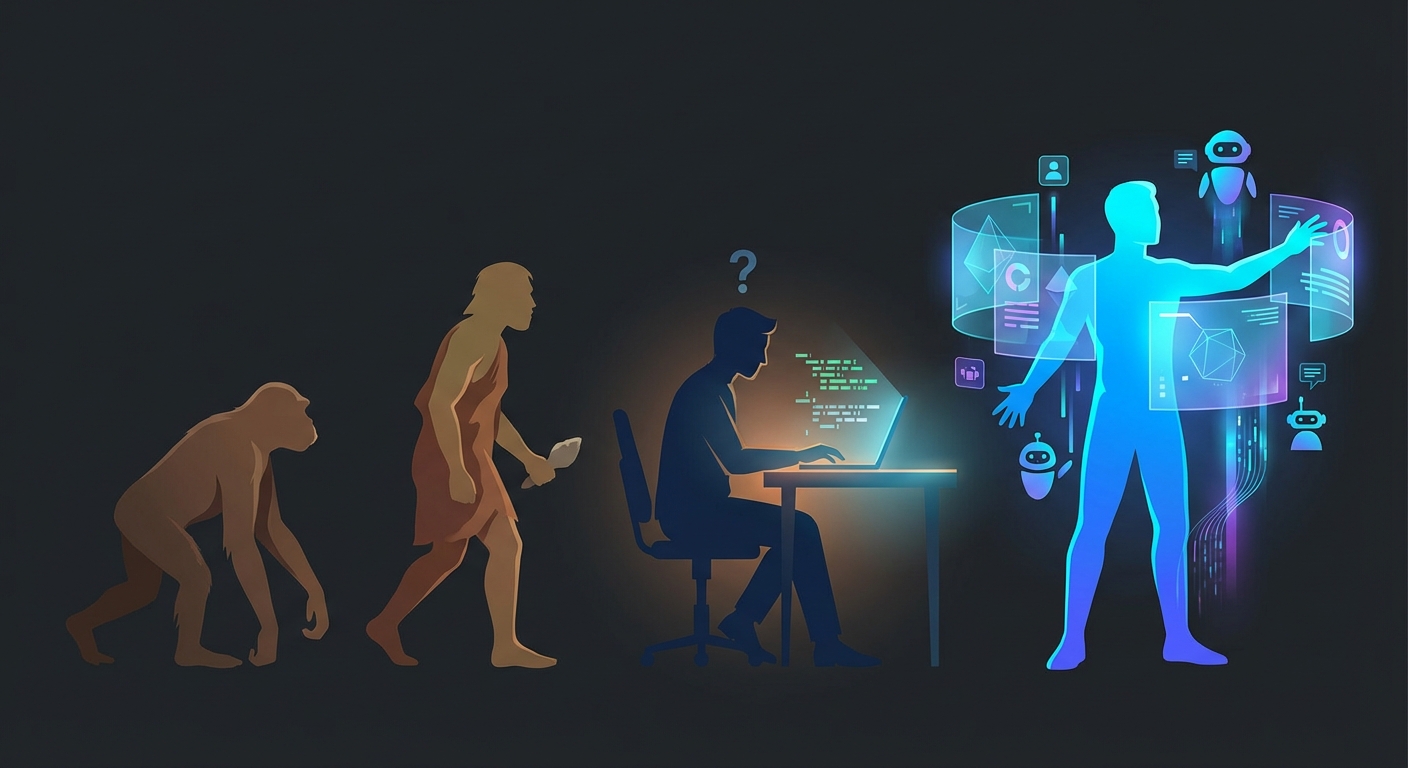
The Three Eras of AI-Assisted Development In less than four years, the way developers use AI has gone through three …