

Inside the Perimeter: A Field Guide to Private AI Adoption
The End of the Series, the Start of the Work Across this series we have argued for a specific position. Private AI — …

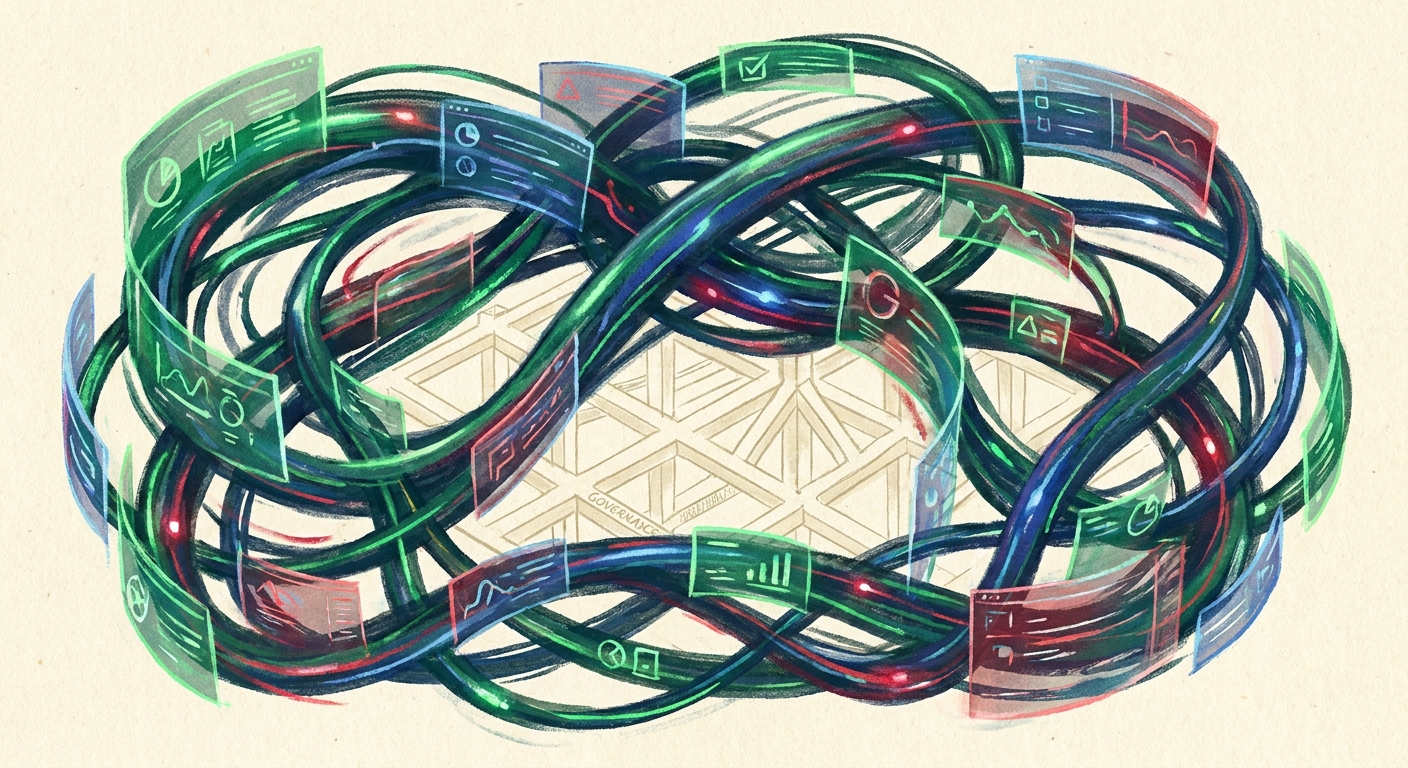

A mid-market financial services firm we worked with last quarter ran an internal survey: how many AI tools is anyone in this company actively using? The IT team estimated four — the corporate-issued ones, plus whatever the sales team was experimenting with. The honest answer, after the survey came back and the security logs were cross-referenced, was twenty-three.
ChatGPT, ChatGPT Team, ChatGPT Enterprise. Claude Free, Claude Pro, Claude Desktop. Three flavors of Copilot — VS Code, GitHub, Windows. Cursor. Cody. Perplexity. Gemini. Notion AI. Jasper. Otter. Fireflies. Cleo for finance reconciliation. Krisp. Reclaim. A handful of vertical tools the marketing team had been bouncing through during their seasonal campaign cycle.
None of those tools, individually, was unreasonable. The sales team’s use of Otter to summarize customer calls actually made the sales team faster. The engineering team’s use of Cursor was producing measurable productivity. The marketing team’s chain of AI tools each filled a specific need.
The problem was not any single tool. The problem was the aggregate: twenty-three tools, twenty-three separate sets of API keys (most BYOK, some company-paid), twenty-three different vendor data-processing agreements (most unread), twenty-three different audit logs (when audit logs existed), twenty-three different identity setups (most signed up with personal Google accounts), twenty-three opportunities for company data to leave the perimeter.
This is tool sprawl. It is the most common AI-adoption pattern in the mid-market in 2026, and it is the architectural state most organizations are trying to climb out of.
┌────────────────────────────────────────────────────────────────┐
│                                                                │
│                    YOUR COMPANY                                │
│                                                                │
│  ┌─────────┐ ┌─────────┐ ┌─────────┐ ┌─────────┐ ┌─────────┐   │
│  │ ChatGPT │ │ Claude  │ │ Cursor  │ │Copilot  │ │ Notion  │   │
│  │ Team    │ │ Pro     │ │         │ │ X3      │ │ AI      │   │
│  └────┬────┘ └────┬────┘ └────┬────┘ └────┬────┘ └────┬────┘   │
│       │           │           │           │           │        │
│  ┌────┴────┐ ┌────┴────┐ ┌────┴────┐ ┌────┴────┐ ┌────┴────┐   │
│  │Otter    │ │Jasper   │ │Fireflies│ │Perplexity│ │Cleo    │   │
│  └────┬────┘ └────┬────┘ └────┬────┘ └────┬────┘ └────┬────┘   │
│       │           │           │           │           │        │
│  ┌────┴────┐ ┌────┴────┐ ┌────┴────┐ ┌────┴────┐ ┌────┴────┐   │
│  │Gemini   │ │Cody     │ │Krisp    │ │Reclaim  │ │ ...    │   │
│  └────┬────┘ └────┬────┘ └────┬────┘ └────┬────┘ └────┬────┘   │
│       │           │           │           │           │        │
│       ▼           ▼           ▼           ▼           ▼        │
│                                                                │
│   23 vendors. 23 DPAs. 23 identity setups.                     │
│   23 audit trails (where audit trails exist).                  │
│   23 chances for data to leave the perimeter.                  │
│                                                                │
└────────────────────────────────────────────────────────────────┘
The aggregate failure mode is what makes sprawl dangerous. No single tool causes a breach; the composition makes the organization unable to answer basic questions: where is our data right now, who has access to our information, what is being trained on what. Twenty-three different vendor relationships is twenty-three places where a security incident has to be tracked and twenty-three places where the next compliance audit has to be reviewed.
A mid-market security team cannot operate this. A 12-person team has, generously, the bandwidth to manage three or four major vendor security relationships. Beyond that, the relationships become administrative theater — paperwork filed, postures unverified, incidents missed.
The specific harms tool sprawl produces in the middle:
┌───────────────────────────────────────────────────────────────┐
│                                                               │
│  Failure                  What it looks like                  │
│  ─────────────────────    ───────────────────────────────     │
│  Data fragmentation       Same customer's data ends up in     │
│                           7 different vendor logs because     │
│                           7 different teams use 7 different   │
│                           AI tools on the same accounts       │
│                                                               │
│  Identity fragmentation   Personal Google accounts on         │
│                           "company" AI tools — when the       │
│                           employee leaves, their access       │
│                           doesn't actually go away            │
│                                                               │
│  Audit fragmentation      "What did our team do with AI       │
│                           last month?" has 23 answers,        │
│                           none of which join cleanly          │
│                                                               │
│  Cost fragmentation       Most of the 23 tools are on         │
│                           personal credit cards or shadow     │
│                           expense lines. The real AI bill is  │
│                           not on any dashboard.               │
│                                                               │
│  Posture fragmentation    Some tools are SOC 2. Some are      │
│                           not. Some are HIPAA. Some are not.  │
│                           Some say "we don't train on your    │
│                           data" but the DPA says otherwise.   │
│                                                               │
└───────────────────────────────────────────────────────────────┘
The combined effect is that an organization with 23 AI tools has, in practice, no AI posture at all. Each individual tool has a posture. The aggregate has none, because nothing aggregates.
This is the state from which most middle-market organizations are trying to recover in 2026.
The obvious response — “consolidate to one or two AI vendors” — does not survive contact with the organization. Three reasons it fails:
The 23 tools are not interchangeable. The sales team’s use of Otter is not replaceable by ChatGPT. The engineering team’s use of Cursor is not replaceable by Claude. Each tool was adopted because it filled a specific need better than the alternatives at the time.
Top-down bans cause shadow tools. Telling employees “you may only use approved tool X” produces a population of employees who use unapproved tool Y on their phone, on personal devices, on home networks. The data still leaves. The audit gets worse, not better.
Vendor selection alone is not architecture. Even if the organization standardizes on three vendors instead of twenty-three, the architecture is the same: data leaving the perimeter, audit fragmentation, identity fragmentation. Picking better vendors does not change the shape.
The fix is not vendor consolidation. The fix is architecture consolidation — a single substrate that absorbs the use cases the 23 tools were filling, while keeping the data, the identity, the audit, and the cost on infrastructure the organization controls.
┌───────────────────────────────────────────────────────────────┐
│                                                               │
│           BEFORE                          AFTER               │
│                                                               │
│   23 vendor relationships          1 substrate, 1 perimeter   │
│   23 audit trails                  1 audit chain              │
│   23 identity setups               1 identity model           │
│   23 cost lines                    1 cost dashboard           │
│                                                               │
│   Many providers behind            Many providers in front of │
│   many tools                       one gateway                │
│                                                               │
│   ┌─────┐┌─────┐┌─────┐...         ┌──────────────────────┐   │
│   │Tool ││Tool ││Tool │            │  One Workbench       │   │
│   │  1  ││  2  ││  3  │            │  + One Gateway       │   │
│   └─────┘└─────┘└─────┘            │  + One Audit Chain   │   │
│       │      │      │              └──────────┬───────────┘   │
│       ▼      ▼      ▼                         │               │
│    Vendor Vendor Vendor               ┌───────┴───────┐       │
│      1      2      3                  │ Many models   │       │
│                                       │ (Anthropic,   │       │
│                                       │ OpenAI, Mistral│      │
│                                       │ Cohere, etc.) │       │
│                                       └───────────────┘       │
│                                                               │
└───────────────────────────────────────────────────────────────┘
The substrate is the workbench (for human-driven AI work) plus the policy gateway (for governed model and tool access). Multiple model providers sit behind the gateway, not in front of it. Multiple use cases sit in front of the substrate, not next to it.
The user experience does not collapse. The 23 use cases that the 23 tools were filling are still served — by different surfaces of the same substrate. The sales team still summarizes calls. The engineering team still gets AI-assisted code. The marketing team still drafts copy. The finance team still reconciles. The substrate handles the routing to the right model behind the gateway.
What collapses is the vendor relationship count, the data exfiltration surface, the audit fragmentation, and the cost line count. One audit chain. One identity model. One bill. One compliance posture.
For an organization in the 23-tool state today, the path out is staged:
   Stage 1: Inventory                                  Weeks 1–2
   ──────────────────────────────────────────────
   Survey + log analysis. What is actually in use,
   by whom, on what accounts, with what data.

   Stage 2: Stand up the substrate                     Weeks 3–6
   ──────────────────────────────────────────────
   Workbench in your cloud. Policy gateway live.
   First team migrated. First audit query answered.

   Stage 3: Migrate by use case                        Weeks 7–14
   ──────────────────────────────────────────────
   Each of the 23 tools' use cases mapped to a
   surface of the substrate. Old tool retired
   as the migration completes per team.

   Stage 4: Decommission and document                  Weeks 15–16
   ──────────────────────────────────────────────
   Remaining vendor accounts canceled. New
   audit-driven processes documented.
   Compliance posture refreshed.
Four months from “23 tools, no posture” to “one substrate, one posture.” Not instant. Not painless. But finite, with measurable milestones, with a clear endpoint.
This is the rollout pattern we run with customers. The technical infrastructure — workbench + Astrolift + Zentinelle — is shipped and operable. The hard part is the change management inside the organization, which is why the commercial offering includes forward-deployed engineering for the stand-up phase: senior engineers who have done this before, embedded with the customer’s team for the first 6–8 weeks.
The diagnostic for tool sprawl is one question, asked honestly:
If a regulator showed up tomorrow and asked “list every AI tool any employee is using that has access to customer data, and produce a 90-day audit trail of what each tool has been given access to” — could you answer in under a day?
Most middle-market organizations cannot. Not because they are negligent. Because their AI adoption pattern has been ad-hoc growth, twenty-three deep, with no architectural intent. The fix is not more policy. The fix is one substrate.
Calliope Workbench — the substrate that absorbs human-driven AI use cases inside your cloud.
Astrolift — the runtime that hosts the substrate and any internal AI apps your teams build.
Zentinelle — the policy gateway that mediates every model and tool call, with one audit chain across all of it.
The three-pillar architecture — the technical map.
calliope.ai/contact — for a structured 90-day rollout conversation.
The End of the Series, the Start of the Work Across this series we have argued for a specific position. Private AI — …

Where the Perimeter Is the Hospital Healthcare networks operate inside a perimeter, even when most administrators do not …