
Calliope IDE v1.4.0: Bedrock Support and Smarter Agents
What’s New in v1.4.0 Calliope AI IDE v1.4.0 is our biggest agent reliability release yet. This update brings full …


A user asks your AI chatbot a question. Nothing happens for 3 seconds. Then the complete 500-word response appears all at once.
They’ve already left.
This is the non-streaming problem. Most AI applications wait for the entire LLM response to generate before sending it to the user. For long responses, this creates an unbearable wait time.
Streaming solves this by sending the response token-by-token as it’s generated. The user sees text appearing in real-time, creating the perception of a responsive, intelligent system.
The difference is dramatic: 3 seconds of waiting vs. 3 seconds of reading as text appears.
The psychology of waiting:
Real-world impact: A financial services chatbot switched from non-streaming to streaming responses. User satisfaction increased 40%. Abandonment rate (users leaving before getting a response) dropped 60%.
The technical advantage: Streaming isn’t just better UX—it’s better architecture:
Non-streaming approach:
User: "Explain quantum computing"
         ↓
LLM generates entire response (3 seconds)
Response: "Quantum computing is..."
         ↓
Send complete response to user
         ↓
User sees: [3 second wait] → entire response appears
Streaming approach:
User: "Explain quantum computing"
         ↓
LLM starts generating response
         ↓
As each token is generated:
  - Send token to user immediately
  - User sees text appear in real-time
         ↓
User sees: [100ms] "Quantum" [50ms] " computing" [50ms] " is" ...
         ↓
Response complete, user has read most of it already
The technical flow:
Client                    Server                    LLM
  │                         │                        │
  ├─ POST /chat ────────────>│                        │
  │                         │                        │
  │                         ├─ Start generation ────>│
  │                         │                        │
  │                         │<─ token: "Quantum" ────┤
  │<─ stream: "Quantum" ─────┤                        │
  │                         │<─ token: " computing" ─┤
  │<─ stream: " computing" ──┤                        │
  │                         │<─ token: " is" ────────┤
  │<─ stream: " is" ─────────┤                        │
  │                         │                        │
  │                         │<─ [END] ───────────────┤
  │<─ stream: [END] ─────────┤                        │
SSE is the simplest streaming approach for HTTP-based applications.
How SSE works:
from flask import Flask, Response
import json

@app.route('/chat', methods=['POST'])
def chat_stream():
    user_message = request.json['message']

    def generate():
        # Stream tokens from LLM
        for token in llm.stream(user_message):
            # Format as SSE
            yield f"data: {json.dumps({'token': token})}

"

    return Response(
        generate(),
        mimetype='text/event-stream',
        headers={
            'Cache-Control': 'no-cache',
            'Connection': 'keep-alive'
        }
    )
Client-side JavaScript:
const eventSource = new EventSource('/chat?message=' + encodeURIComponent(message));
let response = '';

eventSource.onmessage = (event) => {
    const data = JSON.parse(event.data);
    response += data.token;

    // Update UI with streamed text
    document.getElementById('response').textContent = response;
};

eventSource.onerror = () => {
    eventSource.close();
};
Advantages:
Disadvantages:
When to use:
WebSockets provide full-duplex communication for more complex applications.
How WebSockets work:
from flask import Flask
from flask_socketio import SocketIO, emit

app = Flask(__name__)
socketio = SocketIO(app, cors_allowed_origins="*")

@socketio.on('chat_message')
def handle_chat(data):
    user_message = data['message']

    # Stream tokens to client
    for token in llm.stream(user_message):
        emit('token', {'token': token})

    # Signal completion
    emit('done')
Client-side JavaScript:
const socket = io();

socket.on('token', (data) => {
    response += data.token;
    document.getElementById('response').textContent = response;
});

socket.on('done', () => {
    console.log('Response complete');
});

// Send message
socket.emit('chat_message', { message: userInput });
Advantages:
Disadvantages:
When to use:
HTTP/2 provides native streaming with better performance.
How HTTP/2 streaming works:
from quart import Quart, Response

app = Quart(__name__)

@app.route('/chat', methods=['POST'])
async def chat_stream():
    user_message = request.json['message']

    async def generate():
        # Stream tokens from LLM
        for token in llm.stream(user_message):
            yield f"data: {json.dumps({'token': token})}

"
            await asyncio.sleep(0)  # Yield control

    return Response(
        generate(),
        mimetype='text/event-stream'
    )
Advantages:
Disadvantages:
When to use:
For high-performance systems and microservices.
gRPC protocol definition:
service ChatService {
  rpc StreamChat(ChatRequest) returns (stream ChatResponse);
}

message ChatRequest {
  string message = 1;
}

message ChatResponse {
  string token = 1;
  bool done = 2;
}
Python server:
from grpc import aio

class ChatServicer:
    async def StreamChat(self, request, context):
        for token in llm.stream(request.message):
            yield ChatResponse(token=token)
        yield ChatResponse(done=True)

async def serve():
    server = aio.server()
    ChatServicer().add_to_server(server)
    await server.start()
Client:
async with grpc.aio.secure_channel('localhost:50051', credentials) as channel:
    stub = ChatStub(channel)

    async for response in stub.StreamChat(ChatRequest(message=message)):
        if response.done:
            break
        print(response.token, end='', flush=True)
Advantages:
Disadvantages:
When to use:
1. Buffering strategy
Don’t send every single token—batch them for efficiency:
def stream_with_buffering(llm_stream, buffer_size=5):
    buffer = []

    for token in llm_stream:
        buffer.append(token)

        if len(buffer) >= buffer_size:
            yield ''.join(buffer)
            buffer = []

    # Flush remaining tokens
    if buffer:
        yield ''.join(buffer)
Benefits:
Trade-off:
2. Error handling
Errors can occur mid-stream. Handle gracefully:
async def stream_with_error_handling(user_message):
    try:
        for token in llm.stream(user_message):
            yield token
    except LLMError as e:
        yield f"

[Error: {str(e)}]"
    except Exception as e:
        yield f"

[Unexpected error occurred]"
        logger.error(f"Streaming error: {e}")
3. Timeout handling
Long-running requests need timeouts:
async def stream_with_timeout(user_message, timeout=60):
    try:
        async with asyncio.timeout(timeout):
            async for token in llm.stream(user_message):
                yield token
    except asyncio.TimeoutError:
        yield "

[Response generation timed out]"
4. Rate limiting
Prevent abuse of streaming endpoints:
from ratelimit import limits, sleep_and_retry

@sleep_and_retry
@limits(calls=100, period=60)
@app.route('/chat', methods=['POST'])
def chat_stream():
    # Stream response
    pass
5. Monitoring and logging
Track streaming performance:
import time

async def stream_with_monitoring(user_message):
    start_time = time.time()
    token_count = 0

    try:
        for token in llm.stream(user_message):
            token_count += 1
            yield token
    finally:
        elapsed = time.time() - start_time
        tokens_per_second = token_count / elapsed

        metrics.record('streaming_latency', elapsed)
        metrics.record('tokens_per_second', tokens_per_second)
        logger.info(f"Stream complete: {token_count} tokens in {elapsed:.2f}s")
React example with streaming:
import { useState } from 'react';

export function ChatInterface() {
    const [message, setMessage] = useState('');
    const [response, setResponse] = useState('');
    const [loading, setLoading] = useState(false);

    const handleSubmit = async (e) => {
        e.preventDefault();
        setLoading(true);
        setResponse('');

        try {
            const eventSource = new EventSource(
                `/api/chat?message=${encodeURIComponent(message)}`
            );

            eventSource.onmessage = (event) => {
                const data = JSON.parse(event.data);
                setResponse(prev => prev + data.token);
            };

            eventSource.onerror = () => {
                eventSource.close();
                setLoading(false);
            };
        } catch (error) {
            console.error('Streaming error:', error);
            setLoading(false);
        }
    };

    return (
        <div>
            <form onSubmit={handleSubmit}>
                <input
                    value={message}
                    onChange={(e) => setMessage(e.target.value)}
                    placeholder="Ask a question..."
                    disabled={loading}
                />
                <button type="submit" disabled={loading}>
                    {loading ? 'Streaming...' : 'Send'}
                </button>
            </form>
            <div className="response">
                {response}
                {loading && <span className="cursor">|</span>}
            </div>
        </div>
    );
}
Mistake 1: Sending every token individually Creates excessive network overhead. Batch tokens (5-10 per message).
Mistake 2: No timeout handling Stuck connections consume resources. Always set timeouts.
Mistake 3: Ignoring backpressure If client can’t keep up, buffer explodes. Implement proper flow control.
Mistake 4: Poor error handling Errors mid-stream leave users confused. Send clear error messages.
Mistake 5: Not monitoring performance Can’t improve what you don’t measure. Track latency and token throughput.
Use streaming when:
Use non-streaming when:
AI Lab:
Chat Studio:
Deep Agent:
Langflow:
Streaming transforms the user experience from “waiting for a response” to “watching an intelligent system think in real-time.”
Implementation summary:
Start with SSE. It’s simple, effective, and works for most use cases.
What’s New in v1.4.0 Calliope AI IDE v1.4.0 is our biggest agent reliability release yet. This update brings full …
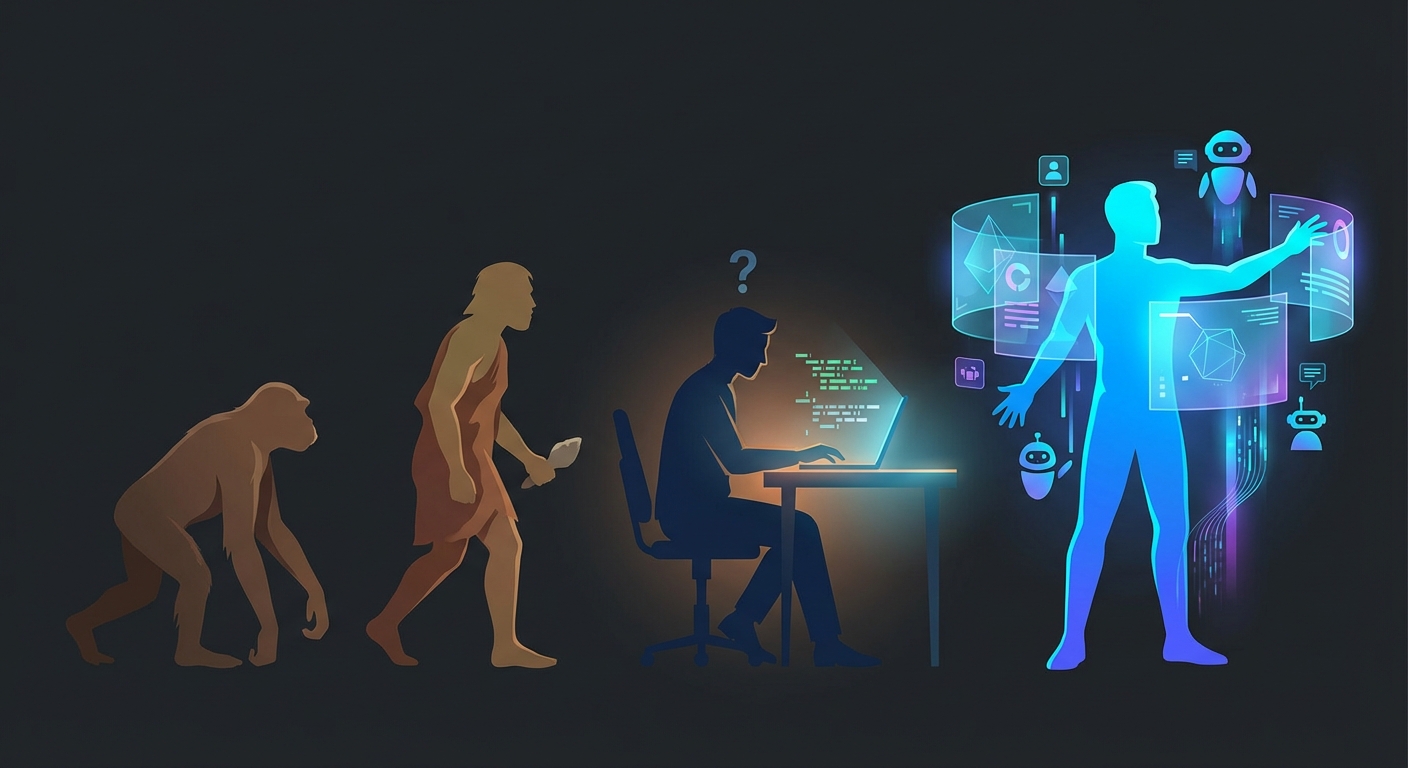
The Three Eras of AI-Assisted Development In less than four years, the way developers use AI has gone through three …