

Calliope IDE v1.4.0: Bedrock Support and Smarter Agents
What’s New in v1.4.0 Calliope AI IDE v1.4.0 is our biggest agent reliability release yet. This update brings full …


How can AI answer questions about your company’s policies, your codebase, or your customer data? It wasn’t trained on that information.
The answer is RAG: Retrieval-Augmented Generation.
Large language models have impressive general knowledge. But they don’t know:
Asking about these things gets you hallucinations or “I don’t have that information.”
RAG combines retrieval (finding relevant information) with generation (AI creating responses):
1. Document Ingestion Your documents are processed and stored in a way AI can search.
2. Query Understanding When you ask a question, AI understands what you’re looking for.
3. Retrieval Relevant document chunks are found using semantic search.
4. Context Assembly Retrieved information is added to the AI’s context.
5. Generation AI generates a response based on the retrieved information.
6. Citation Sources are provided so you can verify.
[User Question]
       ↓
[Query Understanding]
       ↓
[Semantic Search] → [Vector Database]
       ↓
[Relevant Documents Retrieved]
       ↓
[Context + Question → LLM]
       ↓
[Answer with Citations]
Document Processing: Documents are split into chunks (paragraphs or sections) that are meaningful on their own.
Embeddings: Each chunk is converted to a vector (list of numbers) that captures its meaning.
Vector Database: Embeddings are stored for fast similarity search.
Retrieval: When you ask a question, similar chunks are found by comparing embeddings.
Generation: The LLM uses retrieved chunks as context to answer your question.
Grounded in your data: Answers come from your documents, not training data.
Reduced hallucinations: AI answers based on evidence, not invention.
Current information: Updates when your documents update.
Verifiable: Citations let you check the source.
Good chunking: Split documents at natural boundaries. Too small loses context. Too large wastes retrieval.
Quality embeddings: Use embedding models that understand your domain. General embeddings work, but domain-specific can be better.
Retrieval tuning: Find the right number of chunks to retrieve. Too few misses information. Too many overwhelms the LLM.
Prompt engineering: Tell the LLM how to use the retrieved context effectively.
Poor chunking: Information split across chunks doesn’t get retrieved together.
Retrieval failures: Question doesn’t match document language, so relevant content isn’t found.
Context overwhelm: Too much retrieved content confuses the LLM.
Missing citations: Users can’t verify answers without sources.
Calliope makes RAG accessible:
Chat Studio: Connect documents, ask questions, get answers with citations.
AI Lab: Build custom RAG pipelines for your specific needs.
Langflow: Visual RAG pipeline construction.
Deep Agent: Agents that use RAG for research and analysis.
Good RAG use cases:
Consider alternatives when:
For building RAG systems:
RAG turns your documents into AI knowledge.
What’s New in v1.4.0 Calliope AI IDE v1.4.0 is our biggest agent reliability release yet. This update brings full …
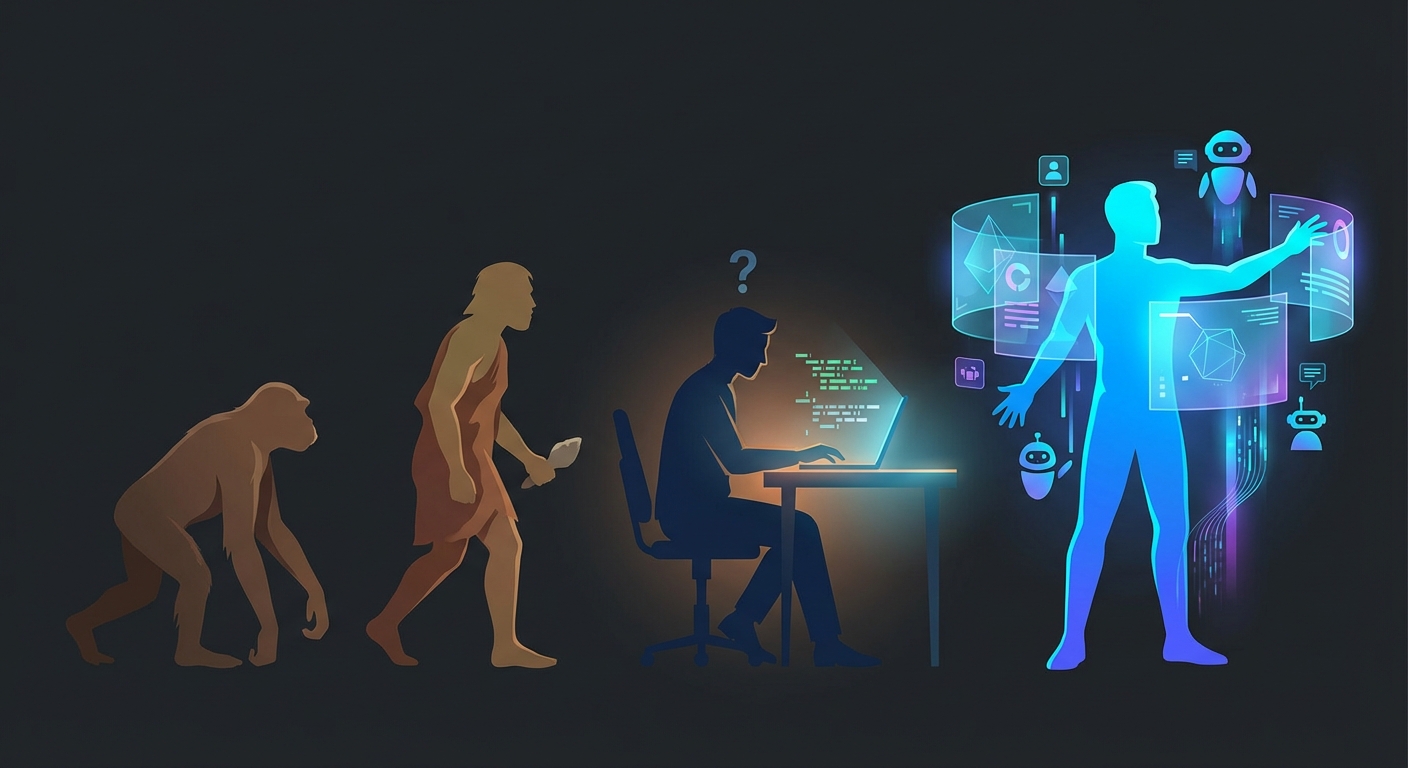
The Three Eras of AI-Assisted Development In less than four years, the way developers use AI has gone through three …