

Calliope IDE v1.4.0: Bedrock Support and Smarter Agents
What’s New in v1.4.0 Calliope AI IDE v1.4.0 is our biggest agent reliability release yet. This update brings full …


ChatGPT is great for general questions. But it can’t connect to your PostgreSQL instance, introspect your schema, run a query, and tell you why revenue dropped last quarter.
Chat Studio can. It’s a desktop AI chat application that connects to your databases, executes SQL, profiles your data, and answers questions grounded in your actual information — not generic training data.
Think of it as ChatGPT with a database client built in. Bring your own AI provider, connect your datasources, and start asking questions in plain English.
Chat Studio supports over 21 LLM providers:
You bring your own API keys. No Calliope account required. No subscriptions. No usage fees beyond what you pay your AI provider directly. All keys are stored locally in an encrypted secrets manager — nothing leaves your machine.
Connect a provider key and Chat Studio automatically discovers every model available on your account. No manual configuration of model IDs. The full catalog appears in a dropdown — switch between Claude, GPT-4, Gemini, and your local Llama model mid-conversation.
Connect a PostgreSQL, MySQL, Snowflake, or MSSQL datasource and Chat Studio automatically introspects the schema. It knows your tables, columns, relationships, and data types.
Ask a question in plain English and it writes the SQL, runs it, and shows the results — all within the chat. Need to explore a new dataset? Ask it to profile a table. It’ll check row counts, null rates, value distributions, and flag anomalies. No manual SQL required.
This isn’t RAG bolted onto a vector store. Chat Studio uses live database connections with real-time schema awareness. Your data stays in your database — the agent queries it on demand.
Enterprise databases sit behind firewalls. Chat Studio supports SSH tunnels with automatic key detection — Ed25519, ECDSA, and RSA keys all work out of the box. Configure your tunnel once and the agent handles connection management, including reconnection on failure.
Chat Studio isn’t a prompt-response chatbot. It uses an agentic architecture with a tool-calling loop. When you ask a question, it plans an approach, selects the right tools (SQL execution, schema introspection, data profiling), executes them, evaluates results, and iterates until it has a complete answer.
Ask it to “find the top 10 customers by revenue last quarter and compare to the same period last year” and it’ll figure out the table structure, write the queries, run them, and present a formatted comparison — without you writing a single line of SQL.
Chat Studio ships as a native desktop application. Download it, run it, connect your keys and databases. There’s no cloud dependency, no account creation, no data leaving your machine.
The macOS build is signed and notarized by Apple — no Gatekeeper warnings, no right-click workarounds. Windows and Linux builds ship as native installers.
| Platform | Architecture | Download |
|---|---|---|
| macOS | Apple Silicon (M1–M4) | DMG |
| Windows | x64 | Installer |
| Linux | x64 / arm64 | AppImage, DEB |
Chat Studio also ships as a component inside Calliope AI Lab — our full desktop data science environment with JupyterLab, notebooks, and a bundled Python stack. And it powers the data analysis layer in JunoHub, our cloud-hosted platform.
Chat Studio’s provider system is designed for extensibility. Each LLM provider implements a base class with standardized methods for chat completion, streaming, and model listing. Adding a new provider is a single Python file and a registration call.
The admin API exposes endpoints for datasource management, provider configuration, and secrets storage — making it straightforward to integrate Chat Studio into larger platform deployments.
We’re actively working on:
Chat Studio is available now as part of Calliope AI Lab v1.3.1 .
What’s New in v1.4.0 Calliope AI IDE v1.4.0 is our biggest agent reliability release yet. This update brings full …
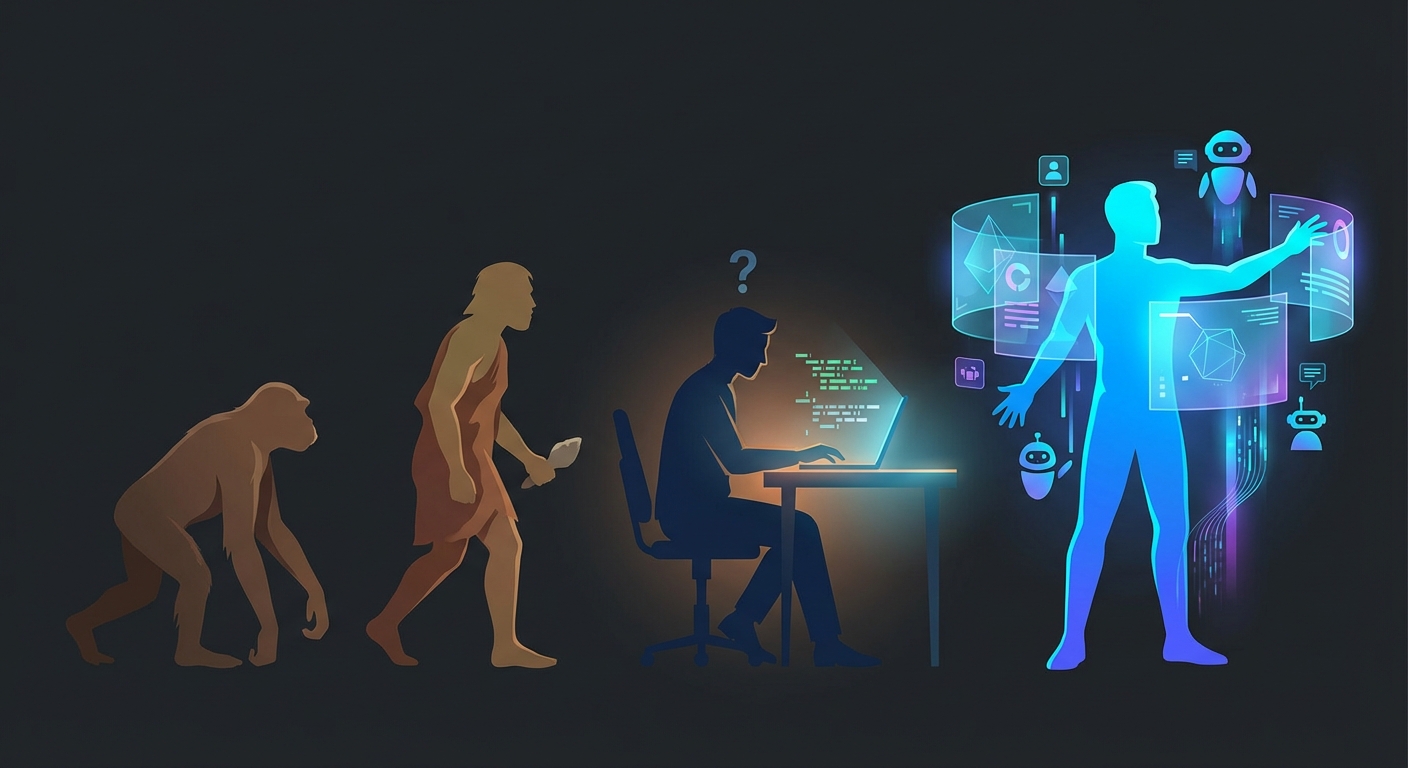
The Three Eras of AI-Assisted Development In less than four years, the way developers use AI has gone through three …